Concept
for the time-being, specific requirements should be read and understood to be "RULES" specifically for this proposed ND Group only. There are many other more general rules that will apply, not influenced by Nd ...would-be competitors need to understand all the rules
If something is not mentioned , then you cant change it from how the model left the factory and was sold to the public via a retail dealer
E.g., The is nothing in the specific requirements/rules allowing you to change the original engine type/style/code/designation, nor its location, so you cant do either of these things.
The is nothing in the specific requirements/rules allowing you to remove or modify any anti intrusion structures that might be inside the front doors, so you cant do that.
If something mentioned is a requirement to remove, disable or change a factory part, or fit some specific part, then you must do that.
E.g.. Remove steering locks, disable any automated (speed related) door locking
if the word "free" is used, it means the component in question can be swapped, modified, removed , disabled or replaced, sometimes with some other caveats.
Group ND Eligible Vehicles
Whilst there is no current definitive list of eligible vehicles, the following outlines what vehicles are hopefully potentially eligible.
key eligibility criteria
- Touring cars that were manufactured between 1 January, 1973 and 31 December, 1984.
- vehicles must have originally had a minimum of four forward facing adult sized seats
- vehicles must have been available to the public through normal vehicle dealership networks with a minimum production volume of 200 units.
- The vehicle being raced is built around a period bodyshell, not a modern replica or reproduction.
What vehicles are eligible
- Any vehicle that raced in Australia in the period under under the CAMS Group C Improved Production Touring Car regulations.
- Any vehicle that was homologated by the FIA as a group 1 touring car in the period with a minimum production volume of 200 units.
- Run-on and Run off vehicles may be used but the appearance and engine must be from a vehicle manufactured in the period from 1 January, 1973 to 31 December, 1984.
see Other Considerations - Any vehicle sold anywhere in the world, It does not have to be a vehicle that was sold or raced within Australia.
[a] Classes
Vehicles shall compete in the following capacity classes which aligns with the existing Na, Nb and Nc capacity Classes:
- Class A Over 5100cc
- Class B 3501cc - 5100cc
- Class C 3001cc - 3500cc
- Class D 2001cc - 3000cc
- Class E 1501cc - 2000cc
- Class F 1101cc - 1500cc
- Class G Up to 1100cc
The Effective Capacity shall be the product of the Swept Volume and an equivalence factor dependent on the engine configuration as per other MSA regulations
- Piston engine – normally aspirated 1.00
- Piston engine – supercharged 1.70
- Rotary engine – normally aspirated 1.80
- Rotary engine – supercharged 3.06
- Piston diesel – supercharged 1.50
[b] Body Work
Group ND Proposal
The body must visually match the model and be from the original manufacturer. However some freedoms and restrictions have been made for the following areas
- The fitment of flares.
- The fitment and modification of front spoilers.
- The fitment of rear spoilers and wings.
- Modifications to the radiator support panel.
- Other general body work modifications.
Note: At no time during competion is the vehicle weight (without driver) permitted to be less than the weight specified in the vehicle specification document.
Justification and Rationale
Flares were permitted and utilized in Australian Group C and FIA group 2
Various manufacturers offered them as standard equipment or option on certain MODELS in the period, eg, Holden Gemini CDT sedan and coupe, Holden LH/LX Torana, Toyota Celica Supra, Mini Clubman & GT
Giving all competitors the option, takes away any real or perceived performance improvement.
Other proposed rules will limit wheel track increases so there cannot be “stupidly wide” flares that are out of context with the PERIOD appearance
Mandating bolt-on flares is an approach to contain costs and matches PERIOD race appearance, especially in Australia (e Group C)
Related Discussions:
Body Modifications Group C v ND
More Detailed information
Flares
Mudguard flares and/or bolt-on extensions are free save that:
- They must be approximately semi-circular and bolted/screwed to the bodywork as per PERIOD (not welded/bonded) and not be “flared or boxed bodywork”
- Where they were factory fitted or factory optional to the MODEL in the PERIOD, they should emulate that shape, size and design as seen in PERIOD competition cars
- They must not prevent any rear door from functioning as intended and thus may include a separate door component.
- Adjacent modified bodywork must be rendered safe by welding or otherwise bonding the metal panels
Front and rear spoilers
Front & Rear Spoilers include rear side rakes of the type seen in the period may be fitted.
Adjustable and or multi-element wings may not be fitted.
Front spoilers may be modified to have an air intake for brakes and/or radiator
Radiator support panel modifications
Revised mounting points for any non-standard radiator are free.
The opening in radiator support panel for the radiator cannot be enlarged.
Limited size holes may be cut into the radiator support panel for the passage of air hose or fluid hoses (refer to Forced Induction and Lubrication sections for more details)
General modifications
Any electric operated door glass windows may be changed to manual operation provided any changes to the door trims are of period appearance.
Additional analogue gauges are free and they can be fitted in the original dash instrument location or elsewhere. One or more warning lights may be fitted, Digital gauges or displays cannot be fitted.
The floor may be changed to allow for drivers seat of a race design.
Door anti- intrusion bars must not be removed or modified
Hinged body panels must all open and close as original
Floor carpet , hood lining, boot or hatch area trims, sound deadening, insulation or seam sealants may be removed.
The shape or material of model specific engine undertrays may be altered provided no undertray may project forward past the radiator, nor be used as a splitter , nor be used to create a “flat floor” car.
Metal bumper bars can be replaced with dimensionally and visually identical parts made from alternate material.
The Battery location can be changed
All exterior lighting such as headlights, tail lights, park lights, indicators, side lights etc must remain as intended. Optional lighting such as fog lights are free. Headlights, tail lights and brake lights must be operational. It is permitted to add an additional centrally located highlevel brakelight or FIA rain light.
General appearance
The vehicles appearance and livery can not be a replica of an original Group C or Group A vehicle.
Advertising Material
Sponsors or advertising material may be displayed on the vehicle in accordance with Motorsport Schedule
Sponsors or advertising material may not include any of the following items that were not available during the Group ND Period
- Mobile Phone Numbers - including manipulations e.g. (04)1234 5678
- Email Addresses
- Website URLS
- QR Codes or Barcodes
[c] Engines Reciprocating
Group ND Proposal
Engine Block and related
The engine block may be original for the model or changed to a later casting/version from the same manufacturer of the vehicle model, provided it :-
- Is made from the same type of material, eg Aluminium alloy or cast iron
- Has identical cylinder bore, crank stroke and crankshaft tunnel sizes
- Has identical main cap fixtures and locations
- Has identical cylinder head fixtures and locations
- Accepts the original camshaft drive system, oil pump, ignition distributor (if fitted to the block)
- Accepts identical engine mounting and support brackets
- Has the same engine model code allocated by the manufacturer
All rotating and reciprocating parts inside the engine block are free save that the crankshaft stroke cannot be altered
The engine mechanical water pump and its drive system is free . Cooling system hoses are free .
Balancing, coating, polishing, surface refinishing , electroplating and heat treatment of any internal component is free.
The block must not be externally altered by grinding off unwanted segments, brackets, manufacturer Identification marks etc.
Cylinder Head
The cylinder head may be a later casting/version from the same manufacturer or a more modern reproduction or performance oriented alternative that may have different size or shape ports. any replacement cylinder heads must also directly mate to original block using original studs/bolts/dowels and also original intake and exhaust manifolds must fit directly to them.
Emission control devices such as EGR valves, are free.
Cylinder head porting is free.
Valve Actuation
Any valve operation system may be freely modified to allow adjustment of the static timing, however the basic method of operation must not change, eg chain drive cannot be swapped for belt drive or gear drive or vice-versa. Belts, chains and tensioning devices are otherwise free.
Valves, valve springs, rocker arms , rocker pedestals , cam buckets , retaining collets and any related packers or shim, are free . Any variable cam timing or valve lift system is free.
Justification and Rationale
The combination of Group N general requirements plus the Na to Nc requirments are seen as too proscriptive and detrimental to wider competitor uptake, especially for a newer cohort or racers with a new generation of more complex vehicles, many of which already compete in speed events like Sprints & Hillclimbs, where few technical requirements exist.
Many of the period MODEL have a vast range of competition parts already available off the shelf
The suggested new Nd rules are more complex because the cars and engines of Nd era are more complex with widespread introduction of multiple overhead cams, electronic injection, turbocharging etc and the nature of modifications not commonly seen on older cars.
A balance has been sought between trying to stay largely “original” (which can drive up costs) and having extensive freedoms to swap engines akin to Sports Sedans or even 3J IP .
[c] Engines Rotary
Group ND Proposal
The rotor housings and end and intermediate plates must be those that were standard for that particular model. The inlet ports in the end and intermediate plates may be modified by the removal of metal, including bridgeporting, but the original O-ring seals must remain unmodified and in their original location.
Justification and Rationale
This is a work in progress needing expert input to evaluate Group Nc requirements and how they may or may not apply to the later model engines of the period. As a starting point our draft specific requirements have followed the Group 2B Production Sports car regs as these may be better suited.
[d] Ignition Systems
Group ND Proposal
The brand and model of ignition coil or coils are free , but the number of ignition coils must not be altered
Spark enhancement using electronic modules, multi-spark or capacitor discharge systems is free, as is adjustable dwell or timing settings
Distributors and any associated electronic control modules are free.
Note: A wasted spark coil assembly or a 2-outlet , 1-piece coil, will be treated as a single coil.
Justification and Rationale
This provides sufficient freedom for cars with both EFI and carburettors and levels the playing field somewhat.
Limiting the number of ignition coils will potentially only effect highly modified forced induction engines and prevent a move to more modern coil-on-plug systems which , whilst common in performance road car modifications, will be visually and obviously incorrect for the PERIOD.
[e] Transmissions
Group ND Proposal
The transmission, clutch, flywheel and any mountings are free save that:
- Any replacement transmission is from a production MODEL, but ratio changes are OK provided the gears retain a helical tooth pattern.
- The transmission retains the same number of forward gear ratios as the model.
- It retains a H pattern manual shifter located in the MODEL location and trimmed/finished as per MODEL
- Dog engagement of gears (non syncro) is not permitted.
- No form of automation of the shifter system or clutch operation is permitted.
Any changes to the bodywork to accommodate a replacement transmission must be neatly finished so the interior appearance is unchanged.
Justification and Rationale
These freedoms will collectively maintain the lowest possible cost of competition by preventing race-only dog boxes and/or sequential shifters being adopted.
Insisting on an unchanged interior appearance helps to maintain a PERIOD appearance whilst still allowing for transmission changes.
[f] Final Drive
Group ND Proposal
The final drive assembly is free save that:
Any replacement assembly cannot widen the wheel drive flange to flange width more than 40mm.
The body work including pick up points for the final drive, remains unchanged.
Justification and Rationale
Being able to alter the final drive assembly allows competitors to utilize readily available and relatively lower cost components, eg using the common HILUX diff for which there are a plethora or race-suitable ratios and LSD or locking units.
MODELS with particularly fragile final drives can be upgraded to better manage costs.
Note: ND vehicle can be RWD live axle, RWD IRS, AWD, FWD.
[g] Suspension
Group ND Proposal
These items are free save that no in cabin adjustment can be possible:
- Springs
- Torsion bars
- Sway or roll bars
- Shock absorbers (dampers), save that their connection points to the body work may not be moved
- Wishbone and linkage rods, arms and their pivoting end “bushes”
Wishbone and/or control arm connection points on body structure or any bolt-in subframe, may be moved by up to 30mm.
Each fully sprung part of the Automobile, except for the exhaust system, must be at least 100mm above the ground when measured at a point within the wheelbases. The Automobile ride height shall be measured with the driver, and all normal necessary equipment fitted.
Justification and Rationale
Permits simple and cheap adoption of off-the shelf components now commonly found on both road going and race cars of the PERIOD.
Enclosed spherical joints were becoming common place in suspension components on a wide variety of cars (eg Triumph Dolomite, Toyota Corolla) , so forcing the use of elastomeric bushes is unnecessary and could result in a perceived performance difference between MODELS.
The freedom to move pivot point locations allows for commonly seen “race” modification on lots of MODELS.
[h] Brakes
Group ND Proposal
Braking system must remain as original ie Drum-Drum, Disc-Drum or Disc-Disc
Brake modifications are restricted as follows:-
- Disc rotors, drums and hydraulic cylinders may be dimensionally changed.
- Calipers may be changed but with no more than 4 pistons on front and 2 pistons on rear and no water cooling. Calipers must remain of period style and appearance.
- Handbrake systems are free,
- Brake discs must retain period appearance with either slots or thru-holes, but not both, and no J hook surfaces.
- Any 2 piece brake discs must have a rigid mounting system between the rubbing face and the mounting hat,
- Brake pedals may be changed in detail but their location in the bodywork must remain.
- Brake air ducting is permitted provided no new intakes are cut in body panels or any moulded plastic front bumper
Any hydraulic or electronic components associated solely with operation of Anti-lock braking systems, are free.
Note: The size of the disk or drum assembly that can be used will be limited by the rim size.
Justification and Rationale
The proposed Nd requirements aim to find a sensible balance between cost to purchase and maintain, improved braking performance and period appearance.
In this PERIOD, braking systems became much more complex with the advent of dual circuit master cylinders, ABS and 4-wheel discs and this can make repair and/or modification complicated.
In some cases, an ABS system cannot be effectively modified for competition use and/or its control devices repaired.
Allowing this package of freedoms improves safety by allowing competitors to choose the best system that will fit under the wheels
Retaining a period appearance for calipers and disks will not adversely impact the overall look of the vehicle.
[I] Wheels
Group ND Proposal
Wheels maybe increased in diameter by no more than 2 inches
Wheel design and construction must be compatible with the PERIOD save that magnesium construction and/or centre lock single nut arrangements are prohibited.
Maximum permitted rim width:
- Class A and B Maximum 9 inches (typically 245, 255 tyre)
- Class C, D and E Maximum 8 inches (typically 225, 235 tyre)
- Class F and G Maximum 6.5 inches (typically 205, 215 tyre)
Wheel nave plates or covers must be removed
Any wheel to hub spacers used must be securely fitted, not slip on
Justification and Rationale
Simplification in line with ever increasing size of wheels found on production cars in the PERIOD
The prohibition on magnesium and centre lock wheel is to cap costs and increase safety in an amateur sport.
Note: Allowing a maximum of 2 Inch increase will permit drivers to upsize to a rim/tyre combination where race tyres are available, 14" and 16" rims are common on ND era cars and race tyres are already obsolete for most common brands.
[j] Tyres
Group ND Proposal
Treaded tyres must be used with the pattern extending both around and across the tyre. Single and 2 groove "slicks" are not considered as “treaded”
Tyres listed on the MSA "GROUPS N & S – APPROVED TYRE LIST " are acceptable, but others not listed, may also meet the requirements above.
Tyre width must be in accordance with the Australian Tyre and Rim handbook for the wheel width being used
Justification and Rationale
Expanding the tyre choice and not proscribing 60% aspect ratio will enable more suitable tyres to be chosen when a competitor wishes to increase the rim diameter as per other rules/freedoms.
[k] Forced Induction (Super Chargers)
Group ND Proposal
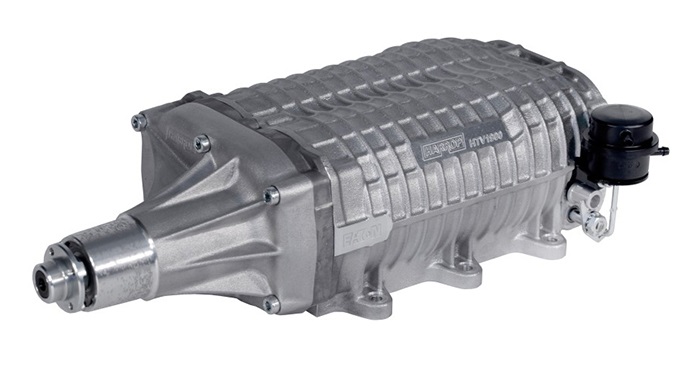
- Supercharging is not permitted unless fitted as standard to the particular model.
- The supercharger general location and its drive system must remain unchanged.
- The brand of supercharger is free save that the type of supercharger must be maintained (e.g. Roots, Twin Screw, Centrifugal, Sliding vane etc.)
- For any replacement supercharger , the per cycle flow of the supercharger can be no more than 40% greater than the standard vehicle supercharger.
- Boost pressure and all other associated components including pulleys, intercooler/s and boost controller/s are free, however any intercooler pipes must only be used to channel air and no external bodywork alterations are made to accommodate the supercharger, intercooler and its pipes. Any holes drilled in inner panels for intercooler pipes must be no larger than needed for the pipe and fitted with a rubber or similar sleeve.
- Water or alcohol injection is prohibited.
- Water cooling of intercoolers is prohibited.
Justification and Rationale
Similar to the current Group 2B regulations.
[k] Forced Induction (Turbo Chargers)
Group ND Proposal
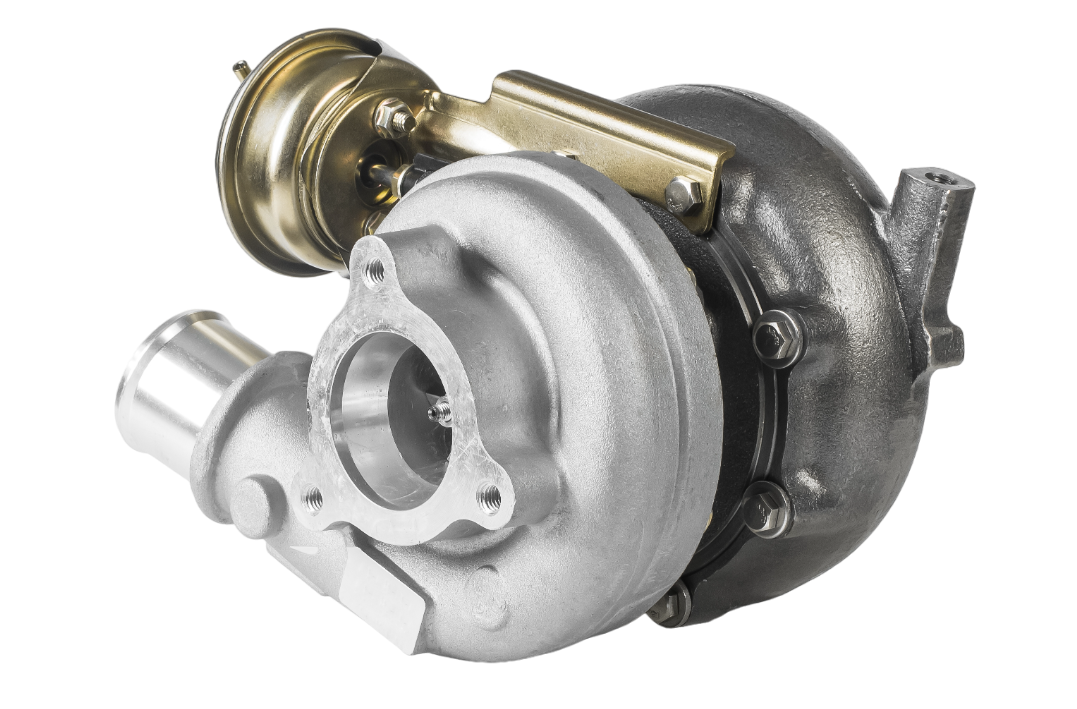
- Turbo charging is not permitted unless fitted as standard to the model.
- Turbocharger/s and associated inlet and exhaust manifold/s are free provided the compressor housing inlet diameter is no larger than the original standard turbocharger compressor wheel inducer diameter plus 10%.
- Twin turbochargers may be replaced by a single turbocharger configuration with an inlet cross sectional area no greater than the combined inlet cross sectional area of the standard twin turbochargers.
- Measurements for the compressor housing inlet diameter and cross sectional area shall be taken at the narrowest point of the inlet - within 1mm of the outermost face of the compressor wheel vane.
- The original turbocharger general location on the manifold (eg top or bottom mount) must remain.
- All other associated components including intercooler/s and boost controller/s are free, however each intercooler pipe (both to and from the intercooler) must only be used to channel air and no external bodywork alterations are made to accommodate the intercooler and its pipes. Any holes drilled in inner panels for intercooler pipes must be no larger than needed for the pipe and fitted with a rubber or similar sleeve.
- Water or alcohol injection is prohibited.
- Water cooling of intercoolers is prohibited.
Justification and Rationale
Similar to the current Group 2B regulations. This is a more sensible approach as repairs to, or replacement of, ND era turbo’s is near impossible.
Most ND era cars that are turbo charged have an inducer diameter much larger than the old MSA restrictor system.
[l] Safety
Group ND Proposal
Mandatory removal of self-locking door latches
Mandatory removal of alarms and immobilizers
Mandatory removal of steering locks
Mandatory removal of Air Bags & Supplementary Restraint Systems (SRS)
Roll cages must comply with Motorsport Australia Schedule J
Mandatory Removal of hood linings, carpets and rear seat.
Justification and Rationale
These are all common sense safety requirements to reduce acidental activation, reduce flammable content from the cabin space and align with current Motorsport Australia requirments.
Related Discussions:

[m] Cooling
Group ND Proposal
The radiator may be replaced but must retain its original location, form and function.
The support panel opening may not be modified except for mounting bolt locations.
The material from which the radiator may be manufactured is free.
Any attached fans or shrouds are free
The control system for any electric fan is free
Justification and Rationale
Allows commonly seen alloy radiators and electric fans to be easily added without disagreements
Freedom with electric fan controllers will allow competitors to choose to use off-the-shelf simple controls or make it a function of either factory or aftermarket ECU
[n] Lubrication System
Group ND Proposal
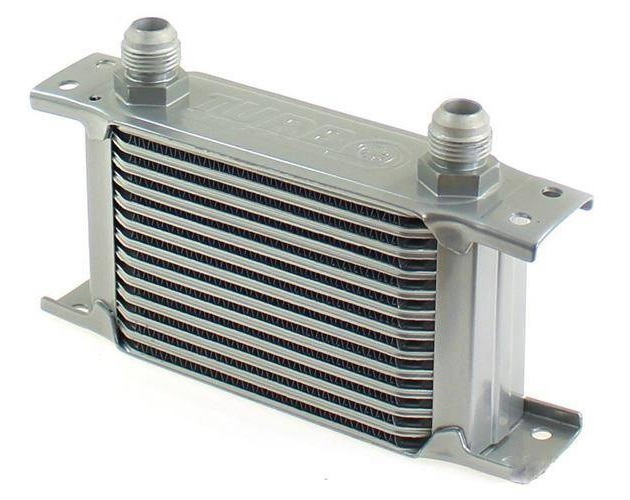
The original lubrication system supplied by the manufacturer must be employed, save that oil pumps may be replaced or modified to enable higher pressure and/or volume, and additional external oil lines to original or approved components may also be employed. Any replacement oil pump must work on the manufacturer's original principle. Sumps as supplied as original equipment for the model in question may be modified to incorporate baffles and/or increased capacity. Oil coolers and remote oil filters are permitted, but the external bodywork must not be altered for the purpose of fitment, nor may they be fitted outside the confines of the standard bodywork. Dry sump lubrication systems are not permitted, unless originally fitted. Remote pressurised oil accumulators are permitted, conditional on them being used in conjunction with a normal wet-sump oil system and serving no other purpose. The capacity of the accumulator must not exceed three litres. Should the accumulator be mounted in the cockpit then the system must comply with the Manual Technical Appendix Schedule A (I)
Any holes drilled in inner panels for Oil Cooling pipes must be no larger than needed for the pipe and fitted with a rubber or similar sleeve
Justification and Rationale
Trivial change to clarify how oil coolers can be “plumbed” and allowing for holes to be made in internal panels to route hoses.
[o] Fuel System
Group ND Proposal
The Fuel delivery system type must remain as per the manufactures specifications in the Vehicle Specifications eg:
- Carburetted
- Mechanical Fuel Injection
- Electronic Fuel injection
Note: For both mechanical and electronic fuel injected cars with reciprocating engines there can be no more than 1 fuel injector per cylinder.
Note: For both mechanical and electronic fuel injected cars with rotary engines there can be no more than 2 fuel injectors per rotor.
Only commercial pump fuels may be used i.e. 98RON, 95RON or 91RON. Fuel blends such as E10, E85 etc are not permitted. "Race Only" fuels such as 104RON are also not permitted.
Justification and Rationale
As other historic classes have permitted quite radical changes to carburetted vehicles. The same freedoms have been translated into both Mechanical Fuel Injection and Electronic Fuel Injection systems that are used on a lot of Group ND era cars.
Restricting the fuel to only commercial pump fuels will curtail the development of very high compression, high revving and excessive forced induction engines. Thus keeping ND cars on a par with other group N cars. This will also reduce the build and run costs of a group ND cars.
Related Discussions:
More Detailed information
Throttle Plates
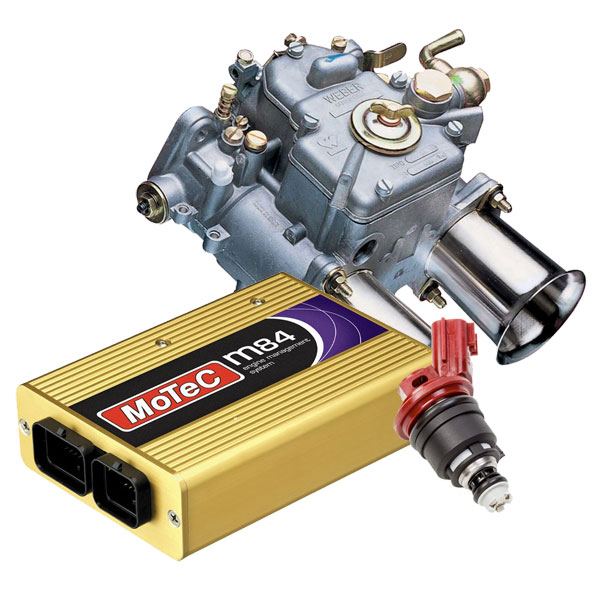
On a carburetted car the original carburettor may be swapped for a different carburettor or replaced with multiple carburettors. The inlet manifold is free.
On fuel injected cars the number of throttle bodies is free as is the inlet manifold.
For Reciprocating engines: The total number of throttle plates can be no more than the number of engine cylinders.
For Rotary engines: The total number of throttle plates can be no more than twice the number of engine rotors.
Fuel Regulation
Fuel pumps and fuel pressure regulation is all free.
On Carburetted cars, elements that control the fuel regulation such as jets, vacuum units, springs and electro-mechanical mechanisms are all free.
On Mechanical Fuel injected cars, elements that control the fuel regulation such as metering units, distributing units, vacuum units, springs, air flow devices and other mechanical mechanisms are all free. The size of the fuel Injectors is free.
On Electronic Fuel injection cars, elements that control the fuel regulation such as the ECU, sensors and pickups used to provide the ECU with engine data are all free. The number of sensors and pickups used is also free. The size of the fuel Injectors is free.
Defintions
Mechanical fuel injection system: For the purpose of these requirements, a mechanical fuel injection system will be defined as any system where the injectors are operated solely by mechanical means, eg a pressure pulse. The inclusion of any electronic devices elsewhere in the system, is considered irrelevant.
Electronic fuel injection system: For the purpose of these requirements, an electronic fuel injection system will be defined as any system where the injectors are operated solely by electrical means, eg a voltage pulse. The inclusion of any mechanical devices elsewhere in the system, is considered irrelevant.